Council Of Management Science & Technology
Hotel & Tourism Foundation Course

- Description
- Curriculum
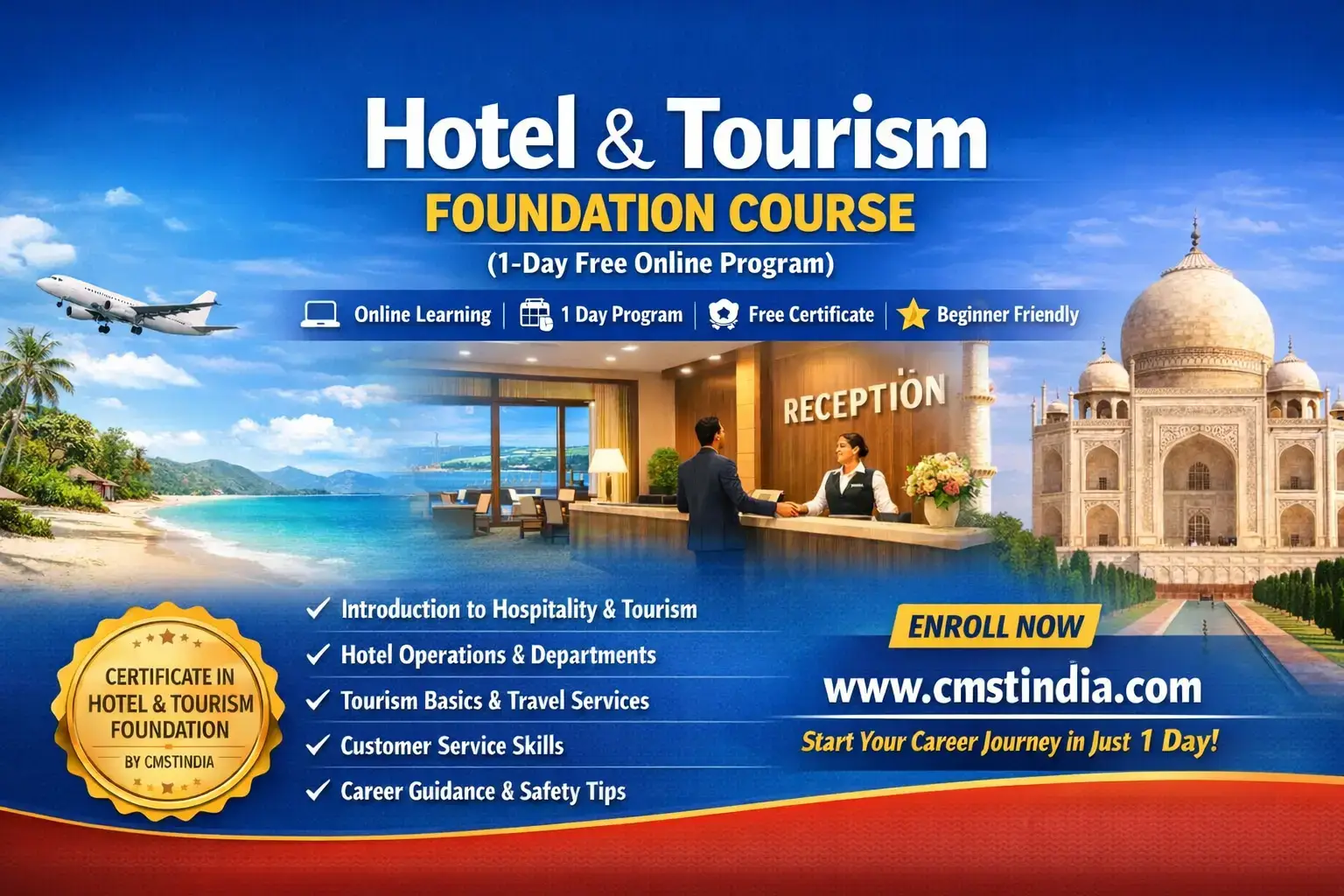
Hotel & Tourism Foundation Course (1-Day Free Online Mini-Program)
By Council of Management Science & Technology, India (CMSTINDIA)
Mode: Online | Level: Beginner | Duration: 1 Hour | Certification: Yes (Free Digital Certificate)
🔹 Course Overview
The Hotel & Tourism Foundation Course by CMSTINDIA is a specially designed 1-hour free online mini-program created for beginners who want to understand the hotel, hospitality, and tourism industry in a simple, practical, and career-oriented way.
This course introduces learners to the core structure of hotels, tourism operations, customer service principles, and career pathways. It is ideal for students, job seekers, and aspiring professionals who wish to build a strong foundation before entering advanced hotel management or tourism programs.
🔹 Why This Course?
-
100% Beginner friendly
-
No prior experience required
-
Short, skill-focused modules
-
Industry-oriented content
-
Free digital certificate from CMSTINDIA
-
Perfect starting point for hospitality & tourism careers
🔹 Who Should Join
-
School & college students
-
Hotel / tourism job aspirants
-
Front office & service staff
-
Travel & tourism beginners
-
Entrepreneurs entering hospitality sector
-
Anyone interested in hotel & tourism industry
🔹 Course Duration & Format
-
Total Duration: 1 Hour
-
Format: Online learning (video / notes / quiz)
-
Assessment: Online MCQ test
-
Certificate: Issued after successful completion
🔹 Course Curriculum
✔ Introduction to Hotel & Tourism Industry
✔ Hotel Operations & Department Basics
✔ Tourism Fundamentals
✔ Customer Service & Professional Skills
✔ Workplace Safety, Hygiene & Career Guidance
🔹 Learning Outcomes
After completing this course, learners will:
-
Understand the structure of hotels and tourism businesses
-
Identify major hotel departments and their functions
-
Gain awareness of tourism types and travel services
-
Improve communication and customer handling skills
-
Explore career opportunities in hospitality and tourism
-
Prepare for advanced diploma or certificate programs
🔹 Certification
Participants will receive a “Certificate in Hotel & Tourism Foundation” issued by the Council of Management Science & Technology, India (CMSTINDIA) in digital format.
🔹 Future Pathways
After this foundation course, learners can progress to:
-
Diploma in Hotel Management
-
Diploma in Travel & Tourism
-
Front Office Executive Training
-
Housekeeping & F&B Service Courses
-
Tourism Operations & Customer Service Programs
🔹 Enroll Now
🚀 Start your journey in Hotel & Tourism — in just one hour.
🌐 Register at: www.cmstindia.com
-
1
 Meaning of hospitality & tourism
Hospitality is about serving and caring for guests, while tourism is about travel and the services that support travelers.
-
2
Difference between hotel and tourism sector
The hotel sector mainly focuses on providing accommodation, food, and guest services, such as rooms, housekeeping, restaurants, and front office operations.
The tourism sector is broader and includes all travel-related activities, such as transportation, tour planning, travel agencies, tourist attractions, and hospitality services, including hotels. -
3
Scope and growth of tourism in India
Tourism in India has a very wide scope due to the country’s rich culture, historical monuments, natural beauty, religious sites, medical facilities, and diverse traditions. India attracts both domestic and international tourists for leisure, spirituality, adventure, education, and healthcare.
The tourism sector in India is one of the fastest-growing industries, creating millions of jobs and supporting hotels, transport, airlines, travel agencies, and local businesses. With increasing digital bookings, government tourism initiatives, and global interest in India, the scope of tourism careers continues to expand rapidly.
-
4
What is a hotel?
A hotel is a commercial establishment that provides paid accommodation, food, and related services to travelers and guests for a short or long stay. Hotels aim to offer comfort, safety, and customer service to make a guest’s stay pleasant.
-
5
Major departments
Major hotel departments are the main functional sections of a hotel that work together to provide smooth services to guests. The key departments include Front Office (guest reception and reservations), Housekeeping (cleanliness and room maintenance), Food & Beverage (restaurants, kitchen, and room service), Maintenance (repairs and safety), and Security (guest and property protection). Each department plays an important role in ensuring guest comfort, safety, and satisfaction.
-
6
Guest service flow
Guest service flow refers to the step-by-step journey of a guest in a hotel, from reservation and arrival to stay, services, and departure. It includes booking, check-in, accommodation services, problem handling, and check-out, ensuring the guest receives smooth, professional, and satisfying service at every stage.
-
7
Importance of professionalism & grooming
Professionalism and grooming are essential in the hotel and tourism industry because staff represent the image of the organization. A well-groomed appearance, polite behavior, clear communication, and positive attitude create trust, improve guest satisfaction, and enhance the overall service experience.
-
8
What is tourism?
Tourism is the activity of traveling to places outside one’s usual environment for purposes such as leisure, business, religion, health, or education. It includes all services that support travelers, such as transportation, accommodation, food, and entertainment.
-
9
Types of tourism (domestic, international, religious, medical, eco, adventure)
Tourism includes different forms such as domestic, international, religious, medical, eco, and adventure tourism, each serving different travel purposes like leisure, spirituality, healthcare, nature exploration, and adventure activities.
-
10
Role of travel agencies and tour operators
Travel agencies and tour operators help tourists plan, book, and manage their journeys. They arrange transportation, accommodation, tour packages, and travel services, making travel easy, safe, and well-organized for customers.
-
11
Basic travel services
Basic travel services include the essential facilities that support tourists, such as transportation, accommodation, food services, sightseeing arrangements, travel assistance, and customer support. These services make travel safe, comfortable, and well-organized.
-
12
Tourist responsibilities
Tourist responsibilities refer to the duties of travelers to respect local culture, protect the environment, follow laws, maintain cleanliness, and behave ethically while traveling, ensuring safe, sustainable, and positive tourism experiences.
-
13
Communication skills
Communication skills are the ability to speak, listen, and respond clearly and politely to others. In hotel and tourism industries, good communication helps staff understand guest needs, solve problems, and deliver quality service.
-
14
Body language & etiquette
Body language and etiquette refer to non-verbal behavior and polite conduct, such as posture, facial expressions, gestures, and manners. In hospitality and tourism, positive body language and proper etiquette create a welcoming impression, build guest trust, and reflect professionalism.
-
15
Handling guests professionally
Handling guests professionally means welcoming them politely, listening carefully to their needs, responding calmly, and providing helpful solutions. Professional guest handling builds trust, improves satisfaction, and creates a positive service experience.
-
16
Complaint handling basics
Complaint handling basics involve listening calmly, apologizing sincerely, understanding the problem, and offering quick solutions. Proper complaint handling helps turn unhappy guests into satisfied customers and protects the organization’s reputation.
-
17
Building a service mindset
Building a service mindset means developing a positive, helpful, and guest-focused attitude. It involves caring about guest needs, taking responsibility, showing empathy, and always aiming to deliver the best possible service experience.
-
18
Professional ethics
Professional ethics are the moral principles and standards of behavior that guide how employees act in the workplace. In hospitality and tourism, professional ethics include honesty, respect, responsibility, confidentiality, and fairness, ensuring trust and professionalism in all services.
-
19
Safety and hygiene awareness
Safety and hygiene awareness means understanding and following practices that ensure cleanliness, health protection, and accident prevention in the workplace. In hospitality and tourism, it helps protect guests and staff, prevent infections, and maintain service quality.
-
20
Entry-level job roles
Entry-level job roles in hotel and tourism are beginner positions that allow individuals to start their careers by learning basic operations, guest service, and workplace skills. Common roles include front office assistant, housekeeping staff, restaurant steward, travel coordinator, tour assistant, and customer service executive.
-
21
Career pathways in hotel & tourism
Career pathways in hotel and tourism describe the progression from entry-level roles to supervisory, managerial, and specialized positions. With skills and experience, professionals can grow into careers in hotel management, tourism operations, travel consultancy, event management, aviation services, and international hospitality.
-
22
Next steps after foundation course
After completing a foundation course, learners should focus on enrolling in advanced diploma or certificate programs, gaining practical training or internships, improving communication and technical skills, and exploring entry-level job opportunities to build a strong career in hotel and tourism.
 Google