Council Of Management Science & Technology

Certificate in Fabric Selection

- Description
- Curriculum
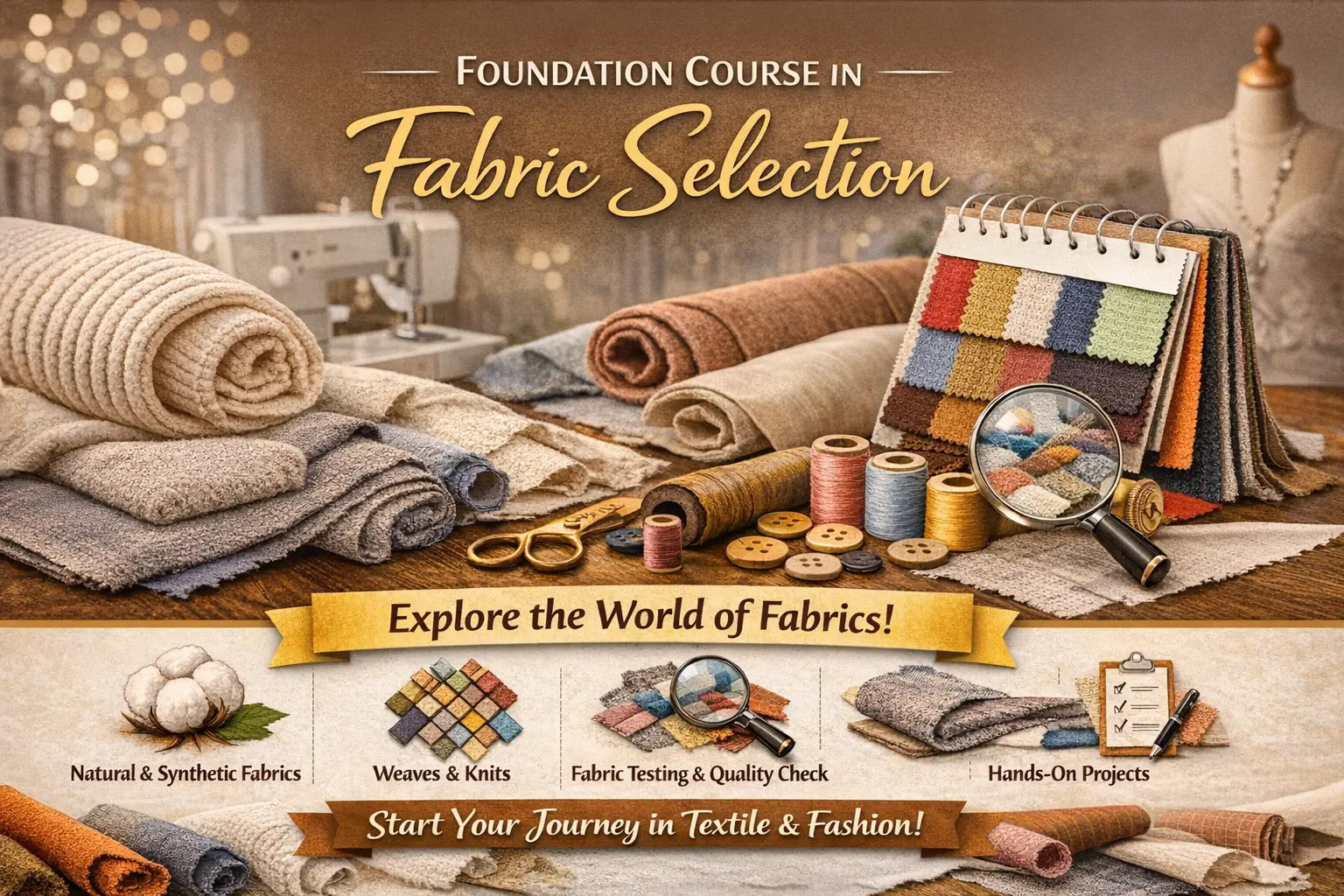
The Certificate Course in Fabric Selection is a comprehensive beginner-level program designed to build strong fundamental knowledge of fabrics, fibers, and textile materials. This course aims to develop a deep understanding of how fabrics are produced, how they behave, and how the correct fabric choice plays a crucial role in comfort, appearance, durability, and performance of garments and textile products.
In today’s fashion, tailoring, garment manufacturing, and interior industries, proper fabric selection is one of the most important professional skills. A well-designed product can fail if the wrong fabric is used. Through this course, learners will gain both theoretical knowledge and practical exposure to various natural, man-made, and blended fabrics, their properties, advantages, limitations, and appropriate applications.
The course begins with an introduction to textile fundamentals, helping students understand the difference between fibers, yarns, and fabrics. Learners will explore different categories of fibers such as cotton, silk, wool, linen, rayon, polyester, nylon, and blends. They will also study fabric construction methods including weaving, knitting, and non-woven techniques, and how these structures influence fabric strength, stretch, drape, and comfort.
Special focus is given to fabric properties like texture, weight, breathability, absorbency, thermal behavior, durability, and color fastness. Students will learn how climate, end-use, fashion trends, cost, and maintenance requirements affect fabric selection decisions. The course also introduces basic fabric testing methods and quality evaluation techniques used in shops and small production units.
Practical sessions guide learners in identifying fabrics by appearance and feel, understanding fabric labels, matching fabrics with garment designs, and selecting suitable materials for different uses such as daily wear, uniforms, sportswear, festive clothing, and home furnishings. By the end of the course, learners will be able to confidently choose fabrics for various applications and avoid common mistakes made by beginners.
This foundation course is ideal for aspiring fashion designers, tailoring students, boutique owners, garment assistants, home science students, and entrepreneurs who want to build a strong base in textile and fabric knowledge.
🎯 Course Objectives
By the end of this course, students will be able to:
-
Understand what fabric is and how it is made
-
Identify natural, artificial, and blended fabrics
-
Analyze fabric properties like texture, strength, comfort, and durability
-
Select suitable fabrics for garments and other products
-
Avoid common fabric selection mistakes
-
Understand basic fabric care and quality checking
👩🎓 Who Should Join
-
Beginners in fashion & textile field
-
Tailors and boutique owners
-
Fashion designing students
-
Home science students
-
Entrepreneurs starting clothing brands
-
Anyone interested in fabrics and clothing
⏳ Suggested Duration
-
Course Length: 1 Day (4–6 Hours)
-
Level: Beginner / Foundation
-
Mode: Theory + Demonstration + Practice
💼 Career Benefits
-
Fashion designing base
-
Boutique and tailoring support
-
Garment industry assistant roles
-
Textile sales and sourcing
-
Home furnishing consultant
-
Small clothing business startup
🏆 Certification
After successful completion, students can be awarded:
“Certificate in Foundation Course of Fabric Selection”
-
1
 What is fabric?
Fabric is a material made by weaving, knitting, or bonding fibers together to create cloth. It is used to make clothes, home furnishings, and many everyday products. Fabrics can be made from natural fibers like cotton, silk, and wool, or man-made fibers like polyester and nylon.
-
2
Difference between fiber, yarn, and fabric
🔹 Difference between Fiber, Yarn, and Fabric
-
Fiber: Fiber is the basic raw material of textiles. It is a thin, hair-like strand obtained from natural sources (cotton, wool, silk) or made artificially (polyester, nylon).
-
Yarn: Yarn is made by twisting or spinning fibers together. It is stronger than fiber and is used to make fabric.
-
Fabric: Fabric is the final cloth made by weaving, knitting, or bonding yarns together. It is used to make garments and textile products.
-
-
3
History and importance of textiles
🧵 History and Importance of Textiles
The history of textiles dates back to ancient civilizations when humans first used natural fibers like cotton, wool, and silk to make clothing and shelter. Over time, textile production evolved from hand spinning and hand weaving to modern machine-based manufacturing. Textiles played a major role in the development of trade, culture, and industry around the world.
Textiles are important because they provide clothing, comfort, protection, and support daily life. Today, textiles are used not only in fashion and home furnishings but also in medical, industrial, and technical fields, making them a vital part of modern society.
-
4
Role of fabric selection in design and comfort
👗 Role of Fabric Selection in Design and Comfort
Fabric selection plays a very important role in both the design and comfort of a product. The right fabric enhances the appearance, shape, and style of a garment, while the wrong fabric can spoil even a good design. Fabric affects how a garment fits, drapes, stretches, and moves on the body. It also controls comfort factors such as softness, breathability, absorbency, warmth, and weight. Proper fabric selection ensures that clothing looks attractive, feels comfortable, and performs well for its intended use.
-
5
Types of Fibers & Differance
🧵 Types of Fibers & Difference
Textile fibers are mainly classified into natural fibers and man-made fibers.
-
Natural fibers are obtained from plants, animals, or minerals, such as cotton, wool, silk, and linen. They are generally breathable, comfortable, and biodegradable.
-
Man-made fibers are produced by chemical processes, such as polyester, nylon, rayon, and acrylic. They are usually strong, durable, wrinkle-resistant, and easy to maintain.
The main difference between them lies in their source, comfort, strength, durability, cost, and environmental impact.
-
-
6
 Types of Fibers Quiz
-
7
Woven fabrics (plain, twill, satin)
🧶 Woven Fabrics (Plain, Twill, Satin)
Woven fabrics are made by interlacing two sets of yarns called warp (lengthwise) and weft (crosswise) at right angles. The way these yarns cross each other is called the weave, and it decides the appearance and properties of the fabric.
-
Plain weave: The simplest weave where warp and weft cross over and under each other alternately. It is strong and durable (e.g., cotton, linen).
-
Twill weave: Characterized by diagonal lines on the fabric surface. It is stronger and more flexible than plain weave (e.g., denim, drill).
-
Satin weave: Has a smooth, shiny surface with long floating yarns. It gives a soft and luxurious appearance (e.g., satin, silk satin).
-
-
8
Knitted fabrics (weft, warp)
🧶 Knitted Fabrics (Weft & Warp)
Knitted fabrics are made by forming loops of yarn instead of interlacing straight yarns like in weaving. These loops give knitted fabrics their natural stretch, softness, and comfort.
-
Weft knitting: Loops are formed across the width of the fabric using a single yarn. It is commonly used in T-shirts, sweaters, and socks.
-
Warp knitting: Loops are formed along the length of the fabric using many yarns. It is stronger and more stable than weft knitting and is used in sportswear, lingerie, and mesh fabrics.
-
-
9
Non-woven fabrics
🧵 Non-Woven Fabrics
Non-woven fabrics are made by bonding, pressing, or chemically joining fibers together instead of weaving or knitting them. They are lightweight, cost-effective, and mostly used for medical, hygiene, industrial, and disposable products such as masks, wipes, surgical gowns, filters, and insulation materials.
-
10
Basics of yarn count and weave effect
🧶 Basics of Yarn Count and Weave Effect
Yarn count refers to the thickness or fineness of a yarn. Fine yarns produce soft, smooth, and lightweight fabrics, while thick yarns produce strong, heavy, and coarse fabrics.
The weave effect is the impact of the weave pattern (plain, twill, satin, etc.) on the appearance, strength, texture, and drape of a fabric. Different weaves change how a fabric looks and feels, even when the same yarn is used.
-
11
Texture and feel
✋ Texture and Feel
Texture and feel refer to how a fabric surface looks and how it feels when touched. Texture can be smooth, rough, soft, crisp, fuzzy, or shiny. Fabric feel affects comfort, appearance, and suitability for use. Soft and smooth fabrics are usually preferred for clothing worn close to the skin, while rough or stiff textures are used for decorative or heavy-duty purposes.
-
12
Weight and thickness
⚖️ Weight and Thickness
Weight and thickness refer to how heavy and how thick a fabric is. Fabric weight affects drape, comfort, durability, and seasonal suitability. Lightweight fabrics are soft and breathable, medium-weight fabrics are suitable for daily wear, and heavy-weight fabrics are strong and used for winter clothing and furnishings. Thickness influences warmth, stiffness, and how a fabric feels and performs in use.
-
13
Strength and durability
💪 Strength and Durability
Strength and durability refer to a fabric’s ability to resist tearing, stretching, and wear over time. Strong and durable fabrics last longer, maintain their shape, and perform well under regular use and washing. These properties are important when selecting fabrics for daily wear, uniforms, upholstery, and industrial purposes.
-
14
Absorbency and breathability
💧 Absorbency and Breathability
Absorbency is the ability of a fabric to soak up moisture such as sweat or water.
Breathability is the ability of a fabric to allow air to pass through it.Fabrics with good absorbency and breathability keep the body cool, dry, and comfortable, making them ideal for daily wear, summer clothing, and sportswear.
-
15
Shrinkage and color fastness
🎨 Shrinkage and Color Fastness – Short Description
Shrinkage is the reduction in size of a fabric after washing or drying.
Color fastness is the ability of a fabric to retain its color without fading or bleeding.Both properties are important because they affect the fit, appearance, and durability of garments. Good shrinkage control and high color fastness ensure long-lasting and quality fabrics.
-
16
Fabrics for summer wear
☀️ Fabrics for Summer Wear
Fabrics for summer wear should be lightweight, breathable, and absorbent to keep the body cool and comfortable. Natural and regenerated fibers such as cotton, linen, rayon, and bamboo fabrics are commonly used because they allow air circulation and absorb sweat easily, reducing heat and skin irritation.
-
17
Fabrics for winter wear
❄️ Fabrics for Winter Wear
Fabrics for winter wear should be warm, thick, and insulating to protect the body from cold weather. Fabrics such as wool, fleece, flannel, velvet, and thermal blends are commonly used because they trap body heat, reduce heat loss, and provide comfort in low temperatures.
-
18
Fabrics for party & fashion wear
✨ Fabrics for Party & Fashion Wear
Fabrics for party and fashion wear are selected mainly for their appearance, drape, shine, and style impact. Materials such as silk, satin, chiffon, georgette, velvet, organza, lace, and sequined fabrics are commonly used because they enhance elegance, luxury, and visual appeal while supporting creative designs.
-
19
Fabrics for sportswear
🏃 Fabrics for Sportswear – Short Description
Fabrics for sportswear are selected for their stretch, breathability, moisture control, and durability. Materials such as polyester, nylon, spandex, and moisture-wicking blends are commonly used because they allow easy movement, dry quickly, and help keep the body cool and comfortable during physical activity.
-
20
Fabrics for home furnishings (curtains, sofa, bedsheets)
🏠 Fabrics for Home Furnishings
Fabrics for home furnishings are selected for their durability, comfort, appearance, and easy maintenance. Materials such as cotton, linen, polyester, velvet, jacquard, and blended fabrics are commonly used for curtains, sofa covers, and bedsheets because they provide the right balance of strength, softness, and decorative appeal.
-
21
Visual inspection
👀 Visual Inspection
Visual inspection is the process of examining a fabric with the eyes to check its appearance, color, surface quality, weave, and visible defects. It helps in identifying issues such as stains, holes, uneven weaving, color variation, and finishing faults before selecting or using the fabric.
-
22
Touch and feel test
✋ Touch and Feel Test
The touch and feel test is a simple method of fabric evaluation where a fabric is handled by hand to judge its softness, smoothness, stiffness, warmth, flexibility, and comfort. It helps in quickly identifying fabric quality and suitability for different uses.
-
23
Burn test (Basic awareness)
🔥 Burn Test (Basic Awareness)
The burn test is a simple fabric identification method where a small fabric sample is carefully burned to observe the smell, flame behavior, ash, and residue. It helps in getting a basic idea about the fiber type (natural or man-made). This test should be done with proper safety precautions and only for learning and basic awareness purposes.
-
24
Shrinkage test
📏 Shrinkage Test
The shrinkage test is a simple method used to check whether a fabric reduces in size after washing or drying. It helps in understanding fabric stability and ensures that garments maintain their proper fit and shape after use.
-
25
Color bleeding test
🎨 Color Bleeding Test
The color bleeding test is a simple method used to check whether a fabric’s color comes out or spreads when it is washed or rubbed with water. It helps to know if the fabric has good color fastness and whether it may stain other clothes during washing or use.
-
26
GSM and thread count basics
📐 GSM and Thread Count
GSM (Grams per Square Meter) measures the weight and thickness of a fabric, helping to identify whether it is light, medium, or heavy.
Thread count refers to the number of threads in one square inch of fabric, indicating fabric fineness and smoothness.Both GSM and thread count help in judging fabric quality, comfort, durability, and end use suitability.
-
27
Washing symbols and labels
🏷️ Washing Symbols and Labels
Washing symbols and labels are small signs and instructions printed on garments that guide how to wash, dry, iron, and clean fabrics safely. They help prevent damage, shrinkage, and color loss by informing users about the correct fabric care methods.
-
28
Washing methods
🧺 Washing Methods
Washing methods refer to the different ways fabrics and garments are cleaned, such as hand washing, machine washing, dry cleaning, and gentle washing. The correct washing method helps remove dirt while protecting fabric quality, color, and shape.
-
29
Ironing and storage
👕 Ironing and Storage
Ironing and storage are important fabric care practices. Proper ironing removes wrinkles and maintains appearance, while correct storage protects fabrics from damage, moisture, insects, and shape loss, helping to increase garment life and quality.
-
30
Common fabric problems (pilling, fading, tearing)
⚠️ Common Fabric Problems (Pilling, Fading, Tearing)
Common fabric problems include pilling (formation of small fiber balls on the surface), fading (loss of color over time), and tearing (fabric breaking or ripping). These problems affect the appearance, comfort, and life of fabrics and usually occur due to poor quality, improper care, or excessive use.
-
31
fabric care knowledge True / False




 Google