Council Of Management Science & Technology
Facial Aesthetic Skin Awareness Program

- Description
- Curriculum
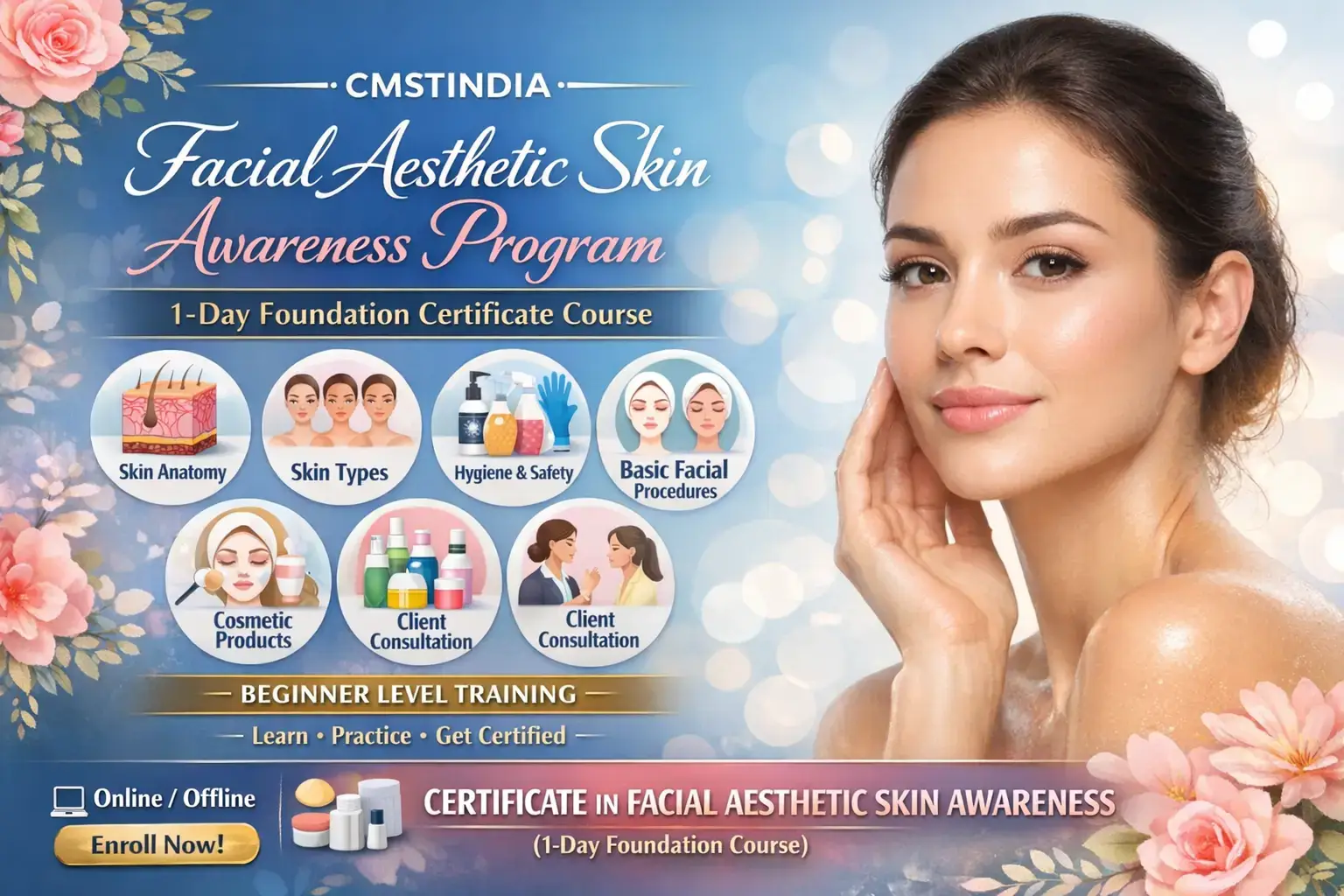
🌸 Facial Aesthetic Skin Awareness Program
1-Day Foundation Certificate Course
Mode: Online
Level: Foundation (Beginner)
Duration: 1 Day
Certification: Yes
🔷 COURSE INTRODUCTION
The Facial Aesthetic Skin Awareness Program (1-Day Foundation Course) is a short-term professional program designed to provide essential knowledge of facial skin, aesthetic principles, hygiene practices, and modern skin care awareness.
This course introduces learners to the science of skin, facial aesthetics, skin types, product awareness, and safe facial care concepts. It is ideal for beginners who want to enter the beauty & wellness field or anyone who wants to build a strong foundation in facial aesthetic skin care.
🎯 COURSE OBJECTIVES
By the end of this course, learners will be able to:
-
Understand basic facial skin anatomy & functions
-
Identify different skin types and common concerns
-
Learn core aesthetic skin care principles
-
Follow professional hygiene & safety awareness
-
Gain knowledge of basic facial procedures
-
Understand cosmetic products & ingredients
-
Perform basic skin analysis & client consultation awareness
⏱️ COURSE STRUCTURE
-
Orientation & Introduction
-
Skin science & skin types
-
Aesthetic care concepts
-
Hygiene & safety awareness
-
Facial procedure overview
-
Product knowledge
-
Client handling basics
-
Assessment & certification briefing
👥 WHO CAN ENROLL
-
Students
-
Beginners in beauty & wellness
-
Salon trainees
-
Homemakers
-
Paramedical aspirants
-
Entrepreneurs
-
Self-care learners
No prior experience required.
🌟 LEARNING OUTCOMES
Learners will gain:
-
Strong foundation in facial skin knowledge
-
Ability to identify skin types correctly
-
Awareness of professional hygiene practices
-
Understanding of facial aesthetic care
-
Confidence to pursue advanced cosmetology or aesthetic programs
💼 CAREER & FUTURE SCOPE
-
Entry-level beauty & skin care training
-
Salon assistant foundation
-
Self-care consultant
-
Aesthetic course pathway
-
Beauty entrepreneurship support
📌 IMPORTANT NOTE
This is a foundation awareness program. It does not replace professional medical or advanced aesthetic training. It prepares learners for higher-level certification programs.
📞 CALL TO ACTION
👉 Enroll Now and Begin Your Journey into Facial Aesthetics
Build a strong foundation in facial skin awareness and start your path in the beauty & wellness industry.
📜 CERTIFICATION
After successful completion, learners will receive:
Certificate in Facial Aesthetic Skin Awareness
(1-Day Foundation Course)
-
1
 Meaning and scope of facial aesthetics
Meaning and Scope of Facial Aesthetics (Short Description)
Facial aesthetics refers to the study and practice of enhancing, maintaining, and protecting the natural appearance and health of facial skin. It focuses on understanding facial structure, skin types, and aesthetic care principles to improve skin quality, balance, and overall facial appeal.
The scope of facial aesthetics includes skin care awareness, facial treatments, cosmetic product knowledge, hygiene practices, non-invasive aesthetic procedures, and professional client consultation. It offers wide opportunities in beauty & wellness industries such as salons, aesthetic clinics, cosmetic brands, wellness centers, and self-care consultancy, and also serves as a foundation for advanced cosmetology and aesthetic training.
-
2
Importance of facial skin care
Importance of Facial Skin Care (Short Description)
Facial skin care is essential for maintaining healthy, clean, and youthful-looking skin. The facial skin is constantly exposed to pollution, sunlight, dust, cosmetics, and stress, which can cause damage, premature aging, acne, and dullness. Proper facial skin care helps to cleanse impurities, balance oil and moisture levels, prevent skin problems, protect against environmental damage, and improve overall skin texture and glow. It also supports confidence, hygiene, and long-term skin wellness.
-
3
Role of aesthetics in modern beauty industry
Role of Aesthetics in the Modern Beauty Industry (Short Description)
Aesthetics plays a vital role in the modern beauty industry by combining skin science with beauty care to enhance appearance, maintain skin health, and boost confidence. It focuses on personalized skin solutions, professional treatments, product innovation, and safe beauty practices. With increasing demand for grooming, wellness, and non-invasive cosmetic procedures, aesthetics has become a key foundation of salons, aesthetic clinics, cosmetic brands, and wellness centers, creating wide career and business opportunities.
-
4
Professional ethics and responsibilities
Professional Ethics and Responsibilities (Short Description)
Professional ethics and responsibilities in facial aesthetics refer to the moral principles, professional behavior, and safety standards that guide aesthetic practitioners. They include honesty, client confidentiality, informed consent, hygiene practices, respect, working within professional limits, and providing safe, truthful, and high-quality services. Ethical practice builds client trust, protects client well-being, and ensures the long-term credibility of the beauty and aesthetic industry.
-
5
Career awareness
Career Awareness (Short Description)
Career awareness in facial aesthetics helps learners understand the wide range of professional opportunities available in the beauty and wellness industry. It introduces various career paths such as aesthetic therapist, skin care specialist, salon professional, clinic assistant, product consultant, wellness advisor, and beauty entrepreneur. Career awareness guides learners to make informed decisions, plan further education, and build a successful future in the growing field of facial aesthetics.
-
6
Structure of skin (epidermis, dermis, hypodermis)
Structure of Skin (Short Description)
The skin is made up of three main layers: epidermis, dermis, and hypodermis. The epidermis is the outer protective layer that shields the body from environmental damage and helps maintain moisture. The dermis lies beneath the epidermis and contains blood vessels, nerves, hair follicles, and glands, providing strength, nourishment, and elasticity to the skin. The hypodermis is the deepest layer made of fat and connective tissue, which cushions the body, insulates against temperature changes, and stores energy.
-
7
Functions of skin
Functions of Skin (Short Description)
The skin performs many vital functions for the body. It acts as a protective barrier against physical injury, germs, and harmful substances. It helps in regulating body temperature through sweat and blood flow. The skin provides sensation, allowing us to feel touch, heat, cold, and pain. It also supports excretion through sweat, prevents water loss, produces vitamin D when exposed to sunlight, and plays an important role in appearance and immunity.
-
8
Facial skin zones
Facial Skin Zones (Short Description)
Facial skin zones refer to different areas of the face that have unique skin characteristics based on oil gland activity, thickness, sensitivity, and exposure. The face is commonly divided into zones such as the T-zone (forehead, nose, chin), which is usually oilier, and the U-zone or cheeks, which are often normal to dry. Understanding facial skin zones helps in identifying skin types, choosing suitable products, and applying targeted facial care treatments.
-
9
Sebaceous & sweat glands
Sebaceous & Sweat Glands (Short Description)
Sebaceous glands are oil-producing glands attached to hair follicles that release sebum to lubricate and protect the skin and hair. They help prevent dryness and form a natural protective barrier. Sweat glands produce sweat, which helps regulate body temperature, remove waste, and maintain skin balance. Both glands play a vital role in skin health, hydration, protection, and facial skin behavior.
-
10
Skin aging process
Skin Aging Process (Short Description)
The skin aging process refers to the natural and gradual changes in the skin over time, leading to reduced collagen and elastin production, slower cell renewal, and loss of moisture. These changes result in wrinkles, fine lines, sagging, dryness, and uneven skin tone. Skin aging is influenced by both internal factors (age, genetics, hormones) and external factors (sun exposure, pollution, lifestyle, stress). Proper skin care helps slow visible signs of aging and maintain healthy skin.
-
11
Normal, dry, oily, combination & sensitive skin
Normal, Dry, Oily, Combination & Sensitive Skin (Short Description)
Skin types are commonly classified as normal, dry, oily, combination, and sensitive based on oil production, moisture balance, and skin reactivity. Normal skin is balanced and healthy. Dry skin lacks moisture and feels tight or flaky. Oily skin produces excess sebum, often appearing shiny and acne-prone. Combination skin has both oily and dry areas, usually an oily T-zone with normal or dry cheeks. Sensitive skin reacts easily to products or environmental factors, often showing redness, itching, or irritation. Understanding skin types is essential for proper skin care and product selection.
-
12
Dehydrated vs dry skin
Dehydrated vs Dry Skin (Short Description)
Dry skin is a skin type that naturally produces less oil (sebum) and often feels rough, flaky, or tight. Dehydrated skin is a temporary condition caused by lack of water in the skin, not oil. Dehydrated skin can occur in any skin type, including oily and combination skin, and often appears dull, tight, and less plump. Understanding the difference is important because dry skin needs more nourishment and oils, while dehydrated skin mainly needs hydration and water-based care.
-
13
Acne-prone and pigmented skin
Acne-Prone and Pigmented Skin (Short Description)
Acne-prone skin is characterized by frequent breakouts, clogged pores, blackheads, whiteheads, and inflammation caused by excess oil, bacteria, and dead skin cells. Pigmented skin refers to skin with uneven tone, dark spots, melasma, or post-acne marks caused by excess melanin production. Both skin types require gentle cleansing, proper sun protection, and targeted skin care to control breakouts, prevent further pigmentation, and maintain an even, healthy complexion.
-
14
Open pores, blackheads, dull skin
Open Pores, Blackheads & Dull Skin (Short Description)
Open pores occur when pores become enlarged due to excess oil, dirt, and reduced skin elasticity. Blackheads are clogged pores filled with oil and dead skin that turn dark when exposed to air. Dull skin appears tired, uneven, and lacking glow due to dead cell buildup, dehydration, poor circulation, and environmental damage. Proper cleansing, gentle exfoliation, hydration, and sun protection help improve these common skin concerns.
-
15
Seasonal skin changes
Seasonal Skin Changes (Short Description)
Seasonal skin changes refer to the way skin reacts to different weather conditions such as summer, winter, monsoon, and dry climates. Temperature, humidity, sun exposure, and pollution affect oil production, hydration levels, and skin sensitivity. These changes can cause dryness in winter, excess oil and acne in summer, and irritation during seasonal transitions. Understanding seasonal skin changes helps in adjusting skin care routines to maintain healthy, balanced skin throughout the year.
-
16
Aesthetic concepts: tone, texture, glow, hydration
Aesthetic Concepts: Tone, Texture, Glow & Hydration (Short Description)
In facial aesthetics, tone, texture, glow, and hydration are key indicators of healthy and beautiful skin. Tone refers to the evenness and uniformity of skin color. Texture describes the smoothness and softness of the skin surface. Glow reflects skin radiance and vitality. Hydration refers to the skin’s water content, which maintains plumpness, elasticity, and comfort. Together, these concepts guide skin analysis and aesthetic care planning.
-
17
Cleansing, exfoliation, nourishment & protection
Cleansing, Exfoliation, Nourishment & Protection (Short Description)
Cleansing, exfoliation, nourishment, and protection are the four basic pillars of facial skin care. Cleansing removes dirt, oil, makeup, and impurities. Exfoliation eliminates dead skin cells and unclogs pores. Nourishment provides essential nutrients, hydration, and repair support to the skin. Protection shields the skin from sun damage, pollution, and premature aging. Together, they maintain healthy, balanced, and radiant skin.
-
18
Day care & night care awareness
Day Care & Night Care Awareness (Short Description)
Day care and night care awareness refers to understanding the different needs of the skin during the day and at night. Day skin care focuses on cleansing, moisturizing, and protecting the skin from sun, pollution, and environmental damage. Night skin care focuses on deep cleansing, nourishment, repair, and skin regeneration while the body rests. Following separate day and night routines helps maintain healthy, balanced, and youthful-looking skin.
-
19
Lifestyle impact on skin
Lifestyle Impact on Skin (Short Description)
Lifestyle habits play a major role in skin health and appearance. Factors such as diet, hydration, sleep, stress, physical activity, hygiene, smoking, and alcohol consumption directly affect skin hydration, aging, breakouts, pigmentation, and healing ability. A healthy lifestyle supports clear, glowing, and youthful skin, while unhealthy habits can lead to dullness, acne, premature aging, and sensitivity.
-
20
Cleansing techniques
Cleansing Techniques (Short Description)
Cleansing techniques refer to proper methods used to remove dirt, oil, makeup, sweat, and impurities from the skin. Correct cleansing improves skin hygiene, unclogs pores, prevents breakouts, and prepares the skin for further care. Gentle movements, suitable cleansers, correct water temperature, and proper frequency are essential for maintaining skin balance and preventing irritation.
-
21
Steaming awareness
Steaming Awareness (Short Description)
Steaming awareness refers to understanding the safe and proper use of facial steam in skin care. Steaming helps to soften the skin, open pores, loosen dirt and oil, and improve blood circulation. It prepares the skin for deep cleansing and exfoliation. However, excessive or improper steaming can cause irritation, dryness, and sensitivity, so correct duration, distance, and skin type consideration are essential.
-
22
Exfoliation types
Exfoliation Types (Short Description)
Exfoliation types refer to different methods used to remove dead skin cells from the skin surface. The main types are physical exfoliation, which uses scrubs or tools to manually remove dead cells, and chemical exfoliation, which uses mild acids or enzymes to dissolve dead skin buildup. Some also include natural exfoliation, using plant-based or gentle ingredients. Understanding exfoliation types helps in choosing safe, skin-type-appropriate methods and preventing skin damage.
-
23
Massage benefits & movement awareness
Massage Benefits & Movement Awareness (Short Description)
Facial massage improves blood circulation, supports lymphatic drainage, relaxes facial muscles, and enhances skin glow and firmness. Movement awareness refers to understanding correct massage directions, pressure, and rhythm to avoid skin stretching and irritation. Proper facial massage techniques help improve product absorption, reduce tension, support skin rejuvenation, and promote overall skin wellness.
-
24
Masks, packs & moisturization
Masks, Packs & Moisturization (Short Description)
Masks, packs, and moisturization are essential steps in facial skin care. Masks and packs provide targeted treatment such as hydration, cleansing, soothing, or brightening. Moisturization locks in hydration, supports the skin barrier, and keeps skin soft, smooth, and protected. Together, they improve skin texture, glow, and overall skin health.
-
25
Sun protection basics
Sun Protection Basics (Short Description)
Sun protection basics involve using methods to protect the skin from harmful ultraviolet (UV) rays. Regular use of sunscreen, protective clothing, and limiting direct sun exposure helps prevent sunburn, pigmentation, premature aging, and skin damage. Proper sun protection is essential for maintaining healthy skin and long-term facial aesthetics.
-
26
Cleansers, toners, serums, moisturizers, sunscreens
Cleansers, Toners, Serums, Moisturizers & Sunscreens (Short Description)
Cleansers, toners, serums, moisturizers, and sunscreens are the core products of a basic skin care routine. Cleansers remove dirt, oil, makeup, and impurities. Toners balance the skin and prepare it for treatment products. Serums deliver concentrated active ingredients to target specific skin concerns. Moisturizers hydrate, nourish, and strengthen the skin barrier. Sunscreens protect the skin from harmful UV rays, preventing damage, pigmentation, and premature aging. Together, they support healthy, balanced, and protected skin.
-
27
Natural vs clinical products
Natural vs Clinical Products (Short Description)
Natural products are made mainly from plant-based or herbal ingredients and focus on gentle care, nourishment, and long-term skin wellness. They are generally mild and suitable for regular maintenance. Clinical products are scientifically formulated with active ingredients designed to target specific skin concerns such as acne, pigmentation, aging, and dehydration. They usually provide faster, more targeted results and are often used under professional guidance. Understanding the difference helps in choosing safe, effective, and skin-type-appropriate products.
-
28
Reading product labels
Reading Product Labels (Short Description)
Reading product labels means understanding the information printed on cosmetic and skin care products, such as ingredients, usage instructions, skin type suitability, manufacturing and expiry dates, and safety warnings. It helps users choose the right products, avoid harmful reactions, ensure product quality, and use skin care items safely and effectively.
-
29
Choosing products according to skin type
Choosing Products According to Skin Type (Short Description)
Choosing products according to skin type means selecting skin care products based on whether the skin is normal, dry, oily, combination, or sensitive. Each skin type has different needs, so using suitable products helps maintain balance, prevent problems like acne or dryness, and improve overall skin health. Correct product selection reduces irritation, supports effective results, and is essential for safe facial aesthetic care.
-
30
Client interaction & ethics
Client Interaction & Ethics (Short Description)
Client interaction and ethics refer to the professional way an aesthetic practitioner communicates, behaves, and builds relationships with clients while following moral values and safety standards. It includes respectful communication, understanding client needs, maintaining confidentiality, taking informed consent, providing honest information, and working within professional limits. Ethical client interaction builds trust, ensures client safety, and supports long-term professional success.
-
31
Basic skin assessment methods
Basic Skin Assessment Methods (Short Description)
Basic skin assessment methods involve observing, touching, and asking questions to understand a person’s skin type, condition, and concerns. These methods include visual inspection, touch analysis, simple oil tests, and client consultation. Proper skin assessment helps in choosing suitable products, planning safe facial treatments, and preventing skin reactions.
-
32
Client history awareness
Client History Awareness (Short Description)
Client history awareness refers to collecting and understanding important background information about a client before providing any facial or skin care service. It includes details about skin problems, allergies, medical conditions, medications, lifestyle habits, and previous treatments. Knowing client history helps ensure safety, avoid complications, customize skin care, and decide when medical referral is required.
-
33
After-care guidance
After-Care Guidance (Short Description)
After-care guidance refers to the instructions given to clients after a facial or skin treatment to protect the skin, support healing, and maintain results. It includes advice on cleansing, moisturizing, sun protection, product use, lifestyle habits, and activities to avoid. Proper after-care reduces irritation, prevents complications, and helps achieve long-lasting skin benefits.
-
34
Professional communication skills
Professional Communication Skills (Short Description)
Professional communication skills refer to the ability to interact clearly, respectfully, and confidently with clients. They include active listening, clear explanation of procedures, polite behavior, positive body language, and ethical information sharing. Strong communication skills help build trust, understand client needs, prevent misunderstandings, and enhance overall service quality in facial aesthetics.




 Google